
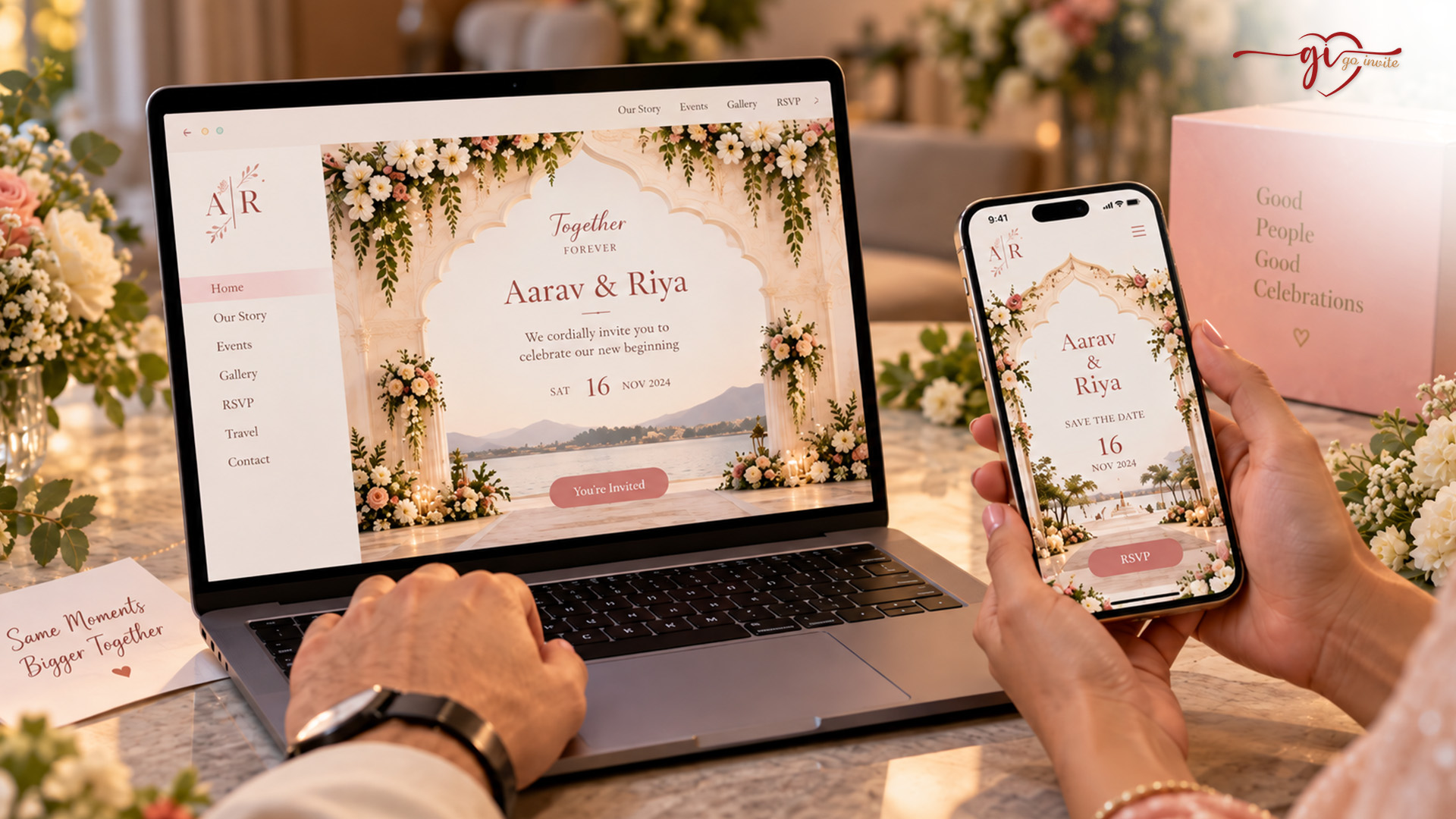
Invitations have always been about more than sharing information. They introduce an occasion, set the mood and give guests their first glimpse of what they can expect. For generations, this was done through printed invitation cards. Then came digital invitation images that could be shared instantly through WhatsApp and other messaging platforms.
Now, another format is becoming increasingly popular: video invitations.
A static invitation can communicate the date, time and venue of an event. A video invitation can take those same details and turn them into an experience. Through movement, music, animation, photographs and storytelling, video invitations can create a stronger emotional connection with the person receiving them.
This does not mean static invitations have become completely irrelevant. They remain useful for many occasions. However, as people become increasingly accustomed to consuming video content every day, expectations around digital invitations are changing too.
So, why are more people turning towards video invitations, and why might a static invitation no longer be enough for certain occasions?
Static Invitations Have Limited Space
A static invitation has to communicate everything through a single frame.
This can work well when an event has only a few essential details. The date, time, venue and host information can be arranged neatly on one image.
The challenge begins when there is more information to communicate.
Weddings, for example, can involve several functions across multiple days. There may be different venues, timings, dress codes, RSVP information and other details that guests need to know.
Trying to fit all of this into one image can make the invitation crowded.
Video invitations provide another way to present the same information. Instead of placing everything into one frame, different details can appear throughout the video.
The guest can watch the invitation from beginning to end and discover the event gradually.
Video Creates Movement
Movement naturally attracts attention.
A static invitation remains the same from the moment it appears on the screen. A video invitation can introduce one element at a time.
The couple’s names can appear first. Then photographs can transition into the event date. The venue can appear later, followed by the schedule and a personal message.
This creates a sense of progression.
Instead of looking at one complete design, the guest experiences the invitation as it unfolds.
This can be especially effective for celebrations where emotion and atmosphere are important.
Music Adds Another Layer
One of the biggest differences between a static invitation and a video invitation is sound.
Music can completely change how an invitation feels.
A wedding video invitation might use a romantic or traditional soundtrack. A birthday invitation could use something energetic and playful. A festival invitation could incorporate music that reflects the occasion.
Sound can create an emotional atmosphere that a static image simply cannot provide.
Even a relatively simple video can feel more immersive when the visuals and music work together.
The important thing is that the music should support the invitation rather than overpower it. The goal is still to communicate the event clearly.
It Can Tell a Story
Static invitations are generally designed to communicate information. Video invitations can communicate information while also telling a story.
This makes them particularly useful for personal occasions.
A wedding invitation could begin with photographs of the couple, move into their names and wedding date, and then introduce the different functions. A birthday invitation could use childhood photographs before revealing the details of the celebration.
The story does not have to be complicated.
Even a short sequence of photographs, text and music can create a narrative that makes the invitation feel more personal.
Instead of simply announcing an event, the video can give guests a small glimpse into the people and memories behind it.
It Makes Photographs More Engaging
Photographs are already an important part of many digital invitations.
But displaying several photographs on a static image can make the design feel crowded. Video allows photographs to appear individually, transition smoothly and interact with other visual elements.
For example, a wedding video could move between engagement photographs, candid moments and family pictures before revealing the wedding details.
This gives each photograph more space.
It also allows the host to use more photographs without turning the invitation into a collage.
Video Invitations Are Designed for Mobile Viewing
Most digital invitations are now received through smartphones.
People may open an invitation while travelling, sitting at work, talking to friends or checking WhatsApp at home.
Video is already a familiar format on mobile devices.
People regularly watch short videos on social media, messaging platforms and entertainment applications. Because of this, a well-made video invitation can feel natural within the digital environment where guests are already spending their time.
It can be shared directly through messaging platforms, making it easy for recipients to watch and forward.
This combination of video and mobile sharing makes the format particularly relevant for modern events.
They Can Reflect the Personality of the Event
An invitation should ideally feel connected to the occasion.
A static template can sometimes make different events look similar. Video provides more creative flexibility.
A modern wedding could have a cinematic visual style. A traditional ceremony could use cultural motifs and music. A child’s birthday could use playful animation. A corporate event could use clean motion graphics and brand elements.
The possibilities are broader because video combines multiple creative components.
The invitation becomes something that can be designed around the personality of the event rather than simply filling information into a template.
Video Can Create Anticipation
One of the most interesting qualities of video invitations is their ability to create anticipation.
A static image reveals all its information immediately.
A video can reveal information gradually.
The first few seconds might establish the mood. The next section can introduce the hosts. Then comes the date, followed by the venue and other details.
This gradual reveal can make the invitation more engaging.
For important occasions, that feeling of anticipation can be valuable because the invitation becomes the beginning of the celebration rather than simply an announcement.
It Can Make Large Events Easier to Explain
Some events involve a lot of information that is difficult to communicate through a single image.
Consider a wedding with several ceremonies. Guests may need to know which event is happening on which day, where each function is taking place and what time they should arrive.
A video invitation can introduce this information in sequence.
Day one can appear first, followed by day two and day three. Each function can have its own visual section.
This creates a natural flow that can be easier to understand than a large block of text.
Video Invitations Can Be Shared Just Like Other Digital Invitations
Another reason video invitations have grown in popularity is that they do not require a completely new way of communicating.
The host can create the video and share it through the same platforms they already use.
WhatsApp remains one of the most convenient channels for sharing invitations. Videos can also be shared through other messaging platforms and social networks, depending on the audience.
This means guests do not have to learn a new system just to receive an invitation.
The format changes, but the basic sharing experience remains familiar.
Does This Mean Static Invitations Are Outdated?
Not necessarily.
Static invitations still have their place.
For a small gathering, a simple invitation image may be all that is needed. Some people also prefer static designs because they are quick to view and easy to save.
The question is not whether static invitations are good or bad.
It is about what the event needs.
If the occasion has a strong visual identity, multiple details, photographs or an emotional story to communicate, video can offer more creative possibilities.
If the event is simple and informal, a static invitation may be perfectly suitable.
Video is not replacing every other format. It is expanding what an invitation can be.
The Future of Digital Invitations Is Becoming More Interactive
As digital communication continues to evolve, invitations are becoming more than digital versions of printed cards.
Video, animation, music, photographs, interactive links, RSVP forms and dedicated invitation websites can all work together.
This creates an invitation experience that can be much richer than a single image.
For hosts, it means there are more ways to express the personality of an event. For guests, it means invitations can become more engaging and useful.
The most effective digital invitations will not simply add movement for the sake of movement. They will use video and other digital elements where they genuinely improve the experience.
Final Thoughts
The rise of video invitations reflects a larger change in the way people communicate.
People are consuming more visual content, events are increasingly being planned and shared digitally, and smartphones have become an important part of how guests receive information.
A static invitation can still be elegant, practical and effective. But video offers something different.
It can combine information with movement, music, photographs and storytelling. It can create atmosphere, reveal details gradually and give guests a stronger sense of the occasion before they even arrive.
For weddings, birthdays, festivals, anniversaries and other important celebrations, this can make the invitation feel less like a message and more like an introduction to the event.
Static invitations are not necessarily disappearing. Instead, the idea of what an invitation can be is expanding.
And as people become more comfortable experiencing important moments through digital media, video invitations are likely to become an increasingly familiar part of how we invite people to celebrate with us.