
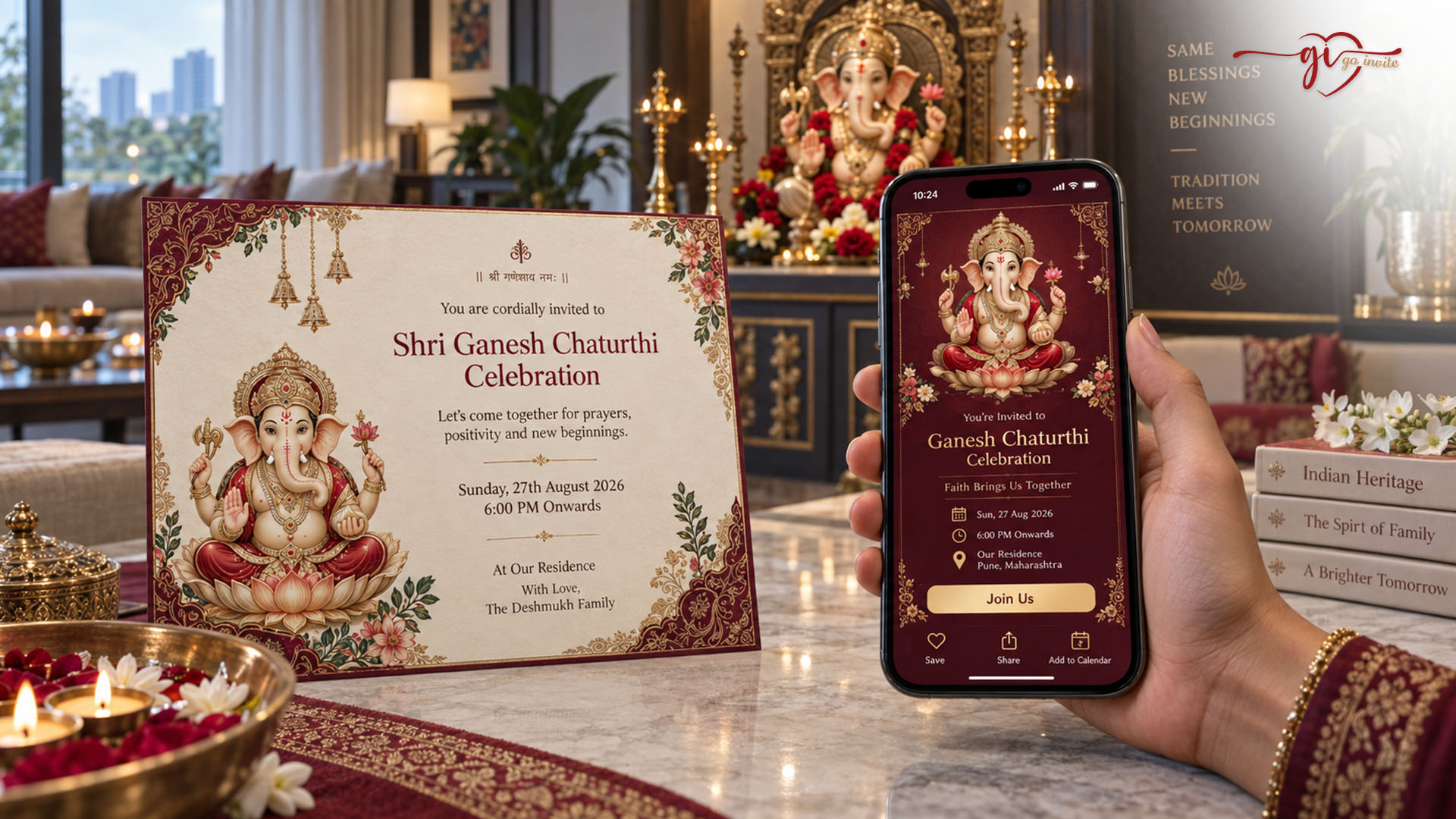
Ganesh Chaturthi is a festival that brings people together. Families invite relatives, friends visit each other, and communities come together for prayers, aarti and celebrations. For many years, a printed invitation card was a common way of inviting people to these celebrations. Today, however, the way people send these invitations is changing.
In 2026, digital invitations have become a simple option for people who want to create and share their Ganesh Chaturthi invitations quickly. Instead of printing cards and handing them out personally, many people can now choose a design, add their details and send the invitation directly through WhatsApp.
This does not mean that traditional invitations have disappeared. Printed cards still have their own importance, especially for families who like the personal feeling of giving someone an invitation by hand. The difference today is that people have more choices when it comes to how they invite their guests.
Traditional Ganesh Chaturthi Invitations Still Have Their Place
There is something personal about receiving a physical invitation. A printed card can be handed over to a relative, neighbour or friend, making the invitation feel like a small part of the celebration itself.
Traditional Ganesh Chaturthi invitation cards can also carry the familiar look of the festival. Designs featuring Lord Ganesha, diyas, flowers, modaks, rangoli patterns and other festive elements can make the card feel connected to the occasion.
For families that have been following the same tradition for years, continuing with printed invitations can also be meaningful. The invitation becomes more than just information about the event. It can become something that people keep as a small memory of the celebration.
However, printed invitations also require more planning. You have to decide on the design, print the required number of cards and then distribute them to everyone. If the timing or venue changes at the last minute, the information on the printed card cannot be changed.
This is where digital invitations can make things easier.
Why Digital Ganesh Chaturthi Invitations Are Becoming Popular
A digital invitation is much easier to create and share. Once the design is ready, it can be sent to relatives, friends and neighbours through WhatsApp without needing to print anything.
This becomes especially useful when guests are living in different cities. A family in Mumbai may have relatives in Pune, Bengaluru, Delhi, Kerala or other parts of the country. Instead of waiting to meet them personally, the invitation can reach them almost instantly.
Digital invitations are also useful when plans are made at the last minute. If you decide to invite a few more people or make a small change to the event details, you can update the invitation and send it again.
The process is simple. Choose a design, add the required information and share it.
For people who do not want to spend time dealing with printing or complicated editing tools, this can make the entire invitation process much easier.
WhatsApp Has Changed the Way We Send Invitations
One of the biggest changes in invitations is the way people communicate. WhatsApp has become a regular part of everyday communication, and festivals are no different.
A Ganesh Chaturthi invitation can now be shared as an image, video or digital card directly through WhatsApp. It can be sent to one person privately or shared with a family, friends or society group.
This is particularly useful for people who are planning their celebrations close to the festival. Instead of saying that they will give someone the invitation when they meet, they can simply send it on WhatsApp.
It also makes it easier to invite people who live far away.
At the same time, a digital invitation does not have to feel like a casual WhatsApp message. With the right design, it can still look like a proper festival invitation.
Digital Does Not Mean You Have to Give Up Tradition
When people hear the term digital invitation, they may imagine something very modern or completely different from a traditional invitation card. That does not have to be the case.
A digital Ganesh Chaturthi invitation can still have a traditional design. It can feature Lord Ganesha, flowers, diyas, festive patterns and other elements that people associate with the festival.
The message can also remain traditional and personal.
The main difference is simply that the invitation is being shared digitally instead of being printed on paper.
This makes the traditional-versus-digital choice less about old versus new and more about what works for your celebration.
Personalisation Is Becoming Easier
Another reason digital invitations are becoming popular is the ability to personalise them easily.
Instead of using the same generic invitation for everyone, people can add their own names, family details, address, date and timings. A personalised invitation can make even a simple digital card feel more thoughtful.
For example, a family can create an invitation that includes the name of the host, the location of the celebration and the time of the aarti. Guests can immediately understand where they need to go and when they need to arrive.
Some digital invitations can also include additional information such as photographs, maps or links, depending on the type of invitation being created.
This can make the invitation more useful while still keeping it simple.
Digital Invitations Can Be Useful for Larger Celebrations
Imagine a family hosting Ganpati for several days. They may have relatives coming for the installation, friends visiting for aarti and neighbours joining for prasad.
In such situations, the family may need to communicate different timings and details to different groups of people.
Creating and sharing digital invitations can make this easier. Different versions can be created for different occasions, without having to print a new set of cards every time.
This flexibility is one of the reasons digital invitations fit well into the way people organise celebrations today.
But Traditional Invitations Are Not Going Away
Even as digital invitations become more common, printed invitations are still relevant.
Some people simply enjoy the experience of receiving and giving a physical card. For close relatives, neighbours or important guests, personally handing over an invitation can still feel more meaningful than sending a message online.
A printed card can also be kept as a memory. A digital invitation may eventually disappear among hundreds of WhatsApp messages, while a physical card can be saved along with photographs and other memories from the festival.
So, there is still a place for traditional invitations.
The choice depends on what matters to the family and how they want to celebrate.
Traditional and Digital Can Work Together
The good thing about invitations in 2026 is that people do not necessarily have to choose one format.
A family can continue using a traditional-looking design while sharing it digitally. This allows them to keep the familiar visual style of a Ganesh Chaturthi invitation without having to print and distribute multiple cards.
For example, you could create an invitation with a traditional Lord Ganesha design, festive elements and a personal message, and then send the same invitation to your guests through WhatsApp.
This keeps the feeling of a traditional invitation while making the process faster and easier.
What Should a Ganesh Chaturthi Invitation Include?
Whether the invitation is printed or digital, the important information remains the same.
Guests should be able to clearly understand who is inviting them, where the celebration is taking place and when they are expected to arrive. The invitation can include the host or family’s name, the date, time, address and details about the aarti or prasad if required.
The design should also make this information easy to read.
There is no need to fill the invitation with too many design elements or unnecessary information. A simple Ganesh illustration, a festive background and clear details can often be enough.
The purpose of the invitation is to make people feel welcome and give them the information they need.
How Ganesh Chaturthi Invitations May Continue to Change
The festival itself is not changing. Families will continue to bring home Ganpati, pray together, prepare food, distribute prasad and spend time with loved ones.
What is changing is the way people organise and communicate around these celebrations.
Digital tools are becoming a part of many everyday activities, and invitations are naturally becoming part of that change. Creating an invitation on a phone and sending it through WhatsApp can save time while still allowing families to keep the traditional feeling of the festival.
This is why digital invitations should not necessarily be seen as a replacement for traditional invitations.
Instead, they offer another way to do something that families have been doing for generations: inviting people to come together and celebrate.
Traditional or Digital? It Depends on You
There is no single format that every family needs to follow.
A traditional invitation may make more sense if you enjoy personally handing cards to relatives and neighbours. A digital invitation may be more convenient if your guests live in different cities or if you need to send invitations quickly.
You can also use both. A printed card can be given to people you meet personally, while the digital version can be shared with relatives and friends who live farther away.
In 2026, Ganesh Chaturthi invitations are not simply moving from traditional to digital. They are becoming more flexible.
The way we communicate may change, but the reason behind the invitation remains the same.
It is about bringing people together, welcoming them into your celebration and sharing the joy of Ganesh Chaturthi with them.
Ganpati Bappa Morya!